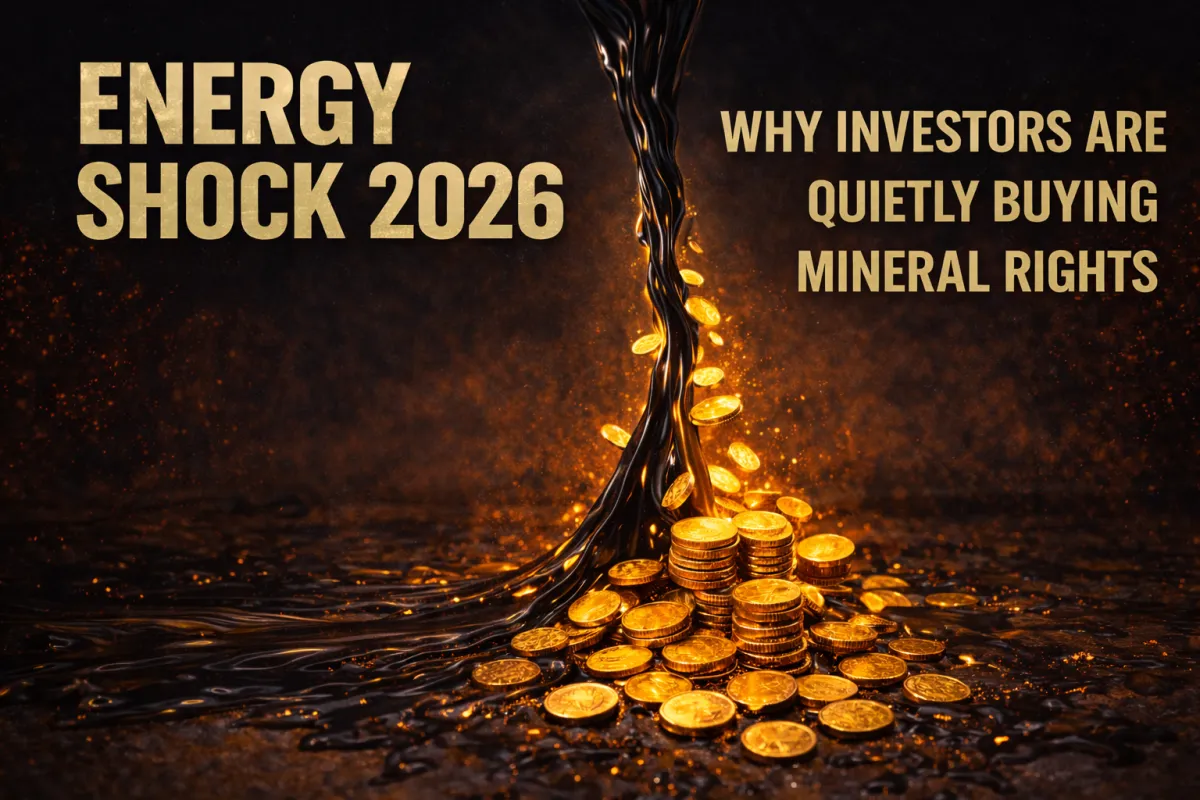
Energy Shock 2026: Why Investors Are Quietly Buying Mineral Rights
Something interesting is happening in the investment world right now.
While the headlines are focused on interest rates, elections, and stock market volatility, a quieter shift is taking place behind the scenes.
Sophisticated investors are moving capital into energy assets.
More specifically, they are buying mineral rights.
Not loudly.
Not on CNBC.
Quietly.
Because when energy markets tighten, the people who own the resource tend to win.
Let’s unpack what is driving this shift and why mineral ownership is starting to show up on the radar of real estate investors, family offices, and alternative asset managers.
The 2026 Energy Reality Most Investors Are Missing
Energy demand did not disappear.
In fact, it has continued to grow.
Global populations are rising.
Data centers are expanding.
Electric vehicles require massive power generation.
Manufacturing is reshoring to North America.
All of this requires energy.
And the truth is simple: oil and natural gas still power most of the global economy.
Despite years of headlines about energy transitions, the world continues to rely heavily on hydrocarbons for transportation, electricity generation, and industrial production.
This creates a structural reality.
Energy supply must keep up with demand.
When it does not, prices rise.
When prices rise, the assets tied to production become more valuable.
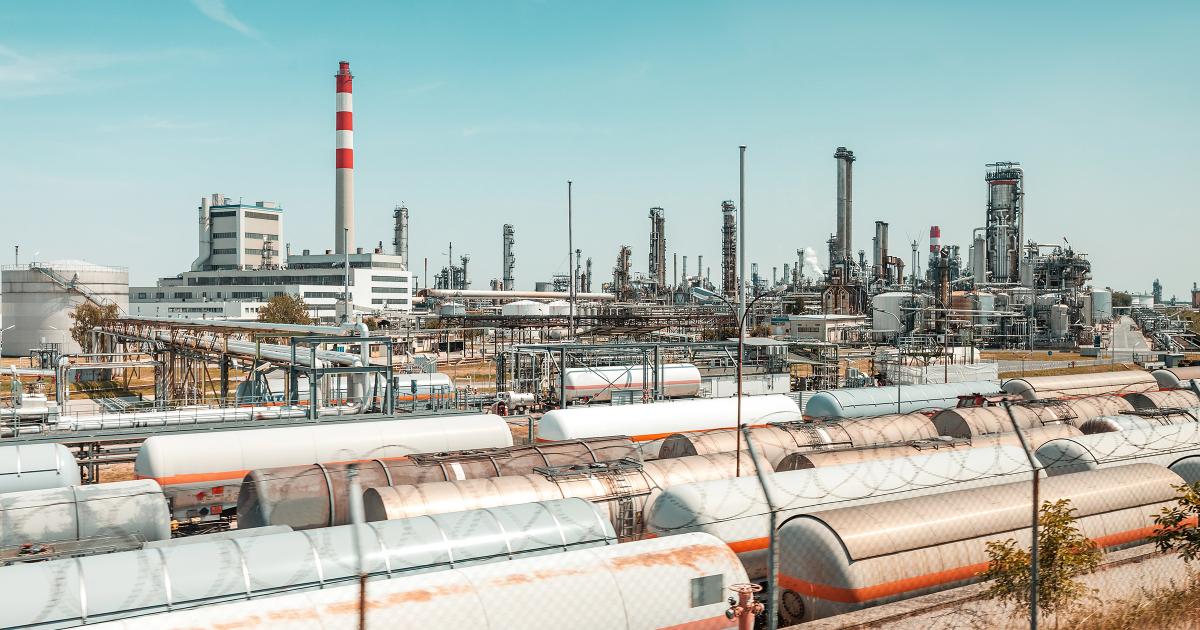
Why Smart Money Is Paying Attention To Mineral Rights
Most investors participate in energy markets through stocks.
They buy oil companies.
They buy ETFs.
They buy pipeline infrastructure.
But there is another way to participate in energy production.
Ownership.
💡 Mineral rights ownership allows investors to own the subsurface resources beneath land. When those resources are extracted, the owner receives royalty income based on production.
That income is not tied to managing wells, drilling operations, or maintaining equipment.
Operators handle that.
🫵🏼 Mineral owners receive a percentage of production revenue.
This structure is what makes mineral rights unique.
They provide exposure to energy production without operational responsibility.
The Difference Between Energy Companies And Mineral Ownership
Many investors misunderstand this distinction.
Energy companies drill wells.
They invest capital.
They manage operations.
Mineral owners provide the underlying resource rights.
Think of it like owning the land under a shopping center.
You are not running the stores.
You are collecting rent from the businesses operating there.
In energy, that “rent” is called a royalty.
➡️ When a well produces oil or gas, the mineral owner receives a share of revenue from that production.
No tenants.
No maintenance.
No operational risk.
Just ownership.
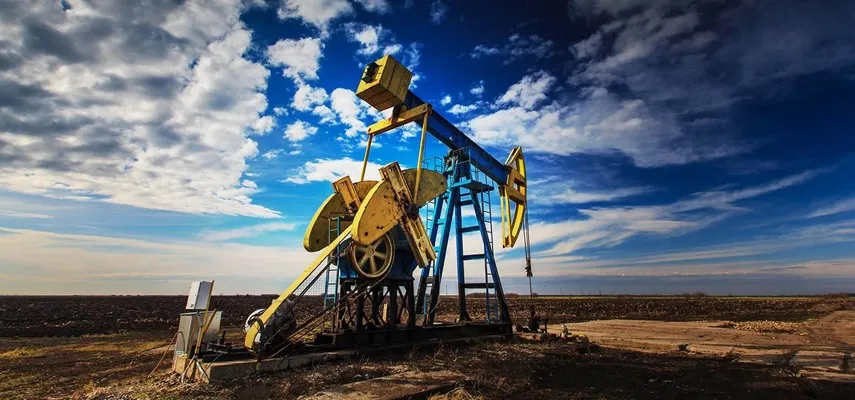
Why Mineral Rights Are Attracting Investor Attention
Several macro forces are converging right now:
1. Energy Security
Geopolitical conflicts and supply disruptions have reminded governments and investors that energy security matters.
Domestic production has become strategically important.
That increases interest in U.S. resource ownership.
2. Inflation Protection
Energy commodities historically respond strongly during inflationary environments.
When prices rise across the economy, energy prices often rise with them.
Assets tied to resource production can therefore provide a hedge against inflation.
3. Passive Income Potential
Mineral rights can generate royalty income tied directly to production.
This makes them attractive to investors seeking income-producing assets without operational involvement.
4. Portfolio Diversification
Most investor portfolios are heavily concentrated in financial assets.
Stocks.
Bonds.
Real estate.
Mineral rights introduce exposure to physical resource production, which behaves differently than traditional assets.
That diversification is increasingly attractive to institutional investors.
Why Real Estate Investors Are Paying Attention
This is where things get interesting.
Real estate investors already understand several key concepts:
Cash flow
Asset ownership
Tax efficiency
Long-term appreciation
Mineral rights share many of these characteristics.
But they remove some of the operational complexity.
🚫 No tenants.
🚫 No property management.
🚫 No building maintenance.
Instead, income is tied to resource extraction.
For investors familiar with passive income strategies, mineral rights can feel like a natural extension of their portfolio.
The Quiet Strategy Wealthy Investors Use
Many family offices and private investors are not abandoning real estate.
They are diversifying beyond it.
They are looking for assets that:
✅ Produce income
✅ Benefit from global demand
✅ Require minimal operational oversight
✅ Provide long-term exposure to critical resources
Mineral rights check many of those boxes.
Which is why capital has been quietly flowing into this asset class.
Not as speculation… As strategy.
The Bigger Picture
Energy markets move in cycles:
Periods of oversupply lead to underinvestment.
Underinvestment leads to supply constraints.
Supply constraints lead to price spikes.
Investors who understand these cycles position themselves early.
🔑 They acquire assets tied to production before the broader market catches on.
That is exactly what appears to be happening with mineral rights.
Final Word
Mineral rights are not a new asset class.
They have existed for generations.
But in today’s environment of energy uncertainty, inflation concerns, and global demand growth, they are receiving renewed attention from sophisticated investors.
Understanding how mineral ownership works is the first step to evaluating whether this type of asset belongs in your portfolio.
If you want to learn the fundamentals of mineral ownership, how royalty income works, and how investors structure these assets, attend the Mineral Rights 101 Webinar.
Inside the webinar we explain:
How mineral ownership works
How royalty income is generated
How investors evaluate mineral assets
How mineral rights fit inside an investment portfolio

Register now or watch the replay.
Because the investors who win in emerging asset classes are usually the ones who understand them first.
And right now, mineral rights are one of the most quietly discussed opportunities in the energy investment world.


